Share on Facebook
 Share on X
 Share by Email
 Share on Google Classroom
The Royal Society of Canada (RSC) is the oldest bilingual organization of Canadian scholars, artists and scientists in the fields of humanities, social sciences and sciences. Created in 1882 and incorporated under an Act of Parliament in 1883, the RSC aims to recognize and promote Canadian research and knowledge. In 2025, the RSC included more than 2,500 members. Members are elected for their contributions in the arts, the humanities and the sciences, as well as in Canadian public life. The Society’s headquarters are located in Ottawa, Ontario.

History
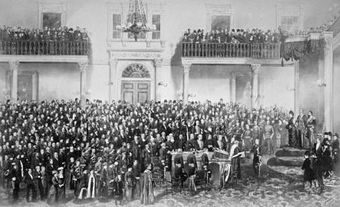
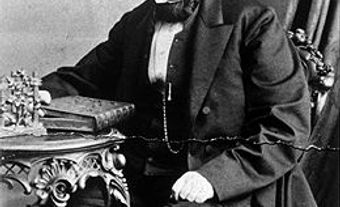
The RSC (also known as The Academies of Arts, Humanities and Sciences of Canada), is the senior national organization for the promotion of learning and research in Canada. The Society was founded in 1882 by the Governor General, John Douglas Sutherland Campbell, Marquess of Lorne, and leading scholars of the day headed by Sir John William Dawson, principal of McGill University, and Pierre-Joseph-Olivier Chauveau, educator and former premier of Quebec. In 1883, the Society was incorporated by an Act of Parliament.


Did you know?
Since the RSC’s foundation succeeding Governors General of Canada have served as honorary patrons.
The founding group of 80 members were organized in four sections, including French and English literature and allied subjects, mathematical and physical sciences and geological and biological sciences.
Academies
The RSC remains one of the few bodies in Canada or elsewhere covering the entire range of scholarship and is now organized in three bilingual academies: the Academy of the Arts and Humanities, the Academy of Social Sciences and the Academy of Science. (See also Social Sciences; Science.)
Fellows
Election as a Fellow of the RSC remains a prized professional honour. As of 2025, this honour was shared by more than 2,500 Canadians. According to the RSC’s website, approximately 20 per cent of members identified French as their mother tongue. Each year, around 100 nominees may be elected. Fellowship comprises four categories: Honorary Fellows, Regularly Elected Fellows, Specially Elected Fellows and International Fellows.
Did you know?
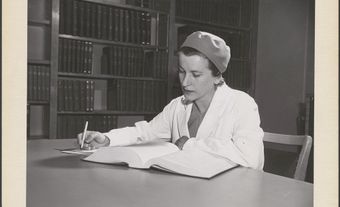
The first woman elected to the RSC was Alice Wilson, a paleontologist, who joined the fellowship in 1938.
College of New Scholars, Artists and Scientists
In 2014, the RSC launched the College of New Scholars, Artists and Scientists (also known as the RSC College). The RSC College compliments the Society’s three academies and recognizes the achievement of individuals within 15 years of having completed their post-doctoral program or its equivalent. Members are elected annually and membership to the RSC College is limited to seven years.
Institutional Members
In 2004, the RSC launched the Institutional Member Programme in order “to provide a mechanism by which, on the one hand, the Society could develop its programmes in conjunction with universities and, on the other hand, universities could have formal and direct input into the strategic orientation and governance of the Society”. To date, there are 66 Institutional Members of the RSC.
Activities and Influence
In its early years the RSC urged the creation of many now-existing national museums and scientific and cultural institutions. With the formation of many learned and scientific societies in specific disciplines it has given increasing attention to complex issues in health, environmental and social concerns requiring a broad, multi-disciplinary approach.
Annual meetings since 1883 have been augmented by national and international symposia, workshops and regional meetings held in centres across Canada and, since 1980, by a program of projects and commissions on important topics of the day. The results have generally been published in its Transactions, or in books and reports.
Internationally, ties to national academies in other countries have grown through a series of bilateral agreements for scholarly exchanges and by leading Canadian contributions to international programs, notably on environmental and social topics.
The RSC also rewards outstanding achievements and distinguished lifetime accomplishments in the humanities, basic and applied sciences and in public education, by awarding a score of medals, prizes and research awards.
Presidents of the RSC


|
President |
Term |
|
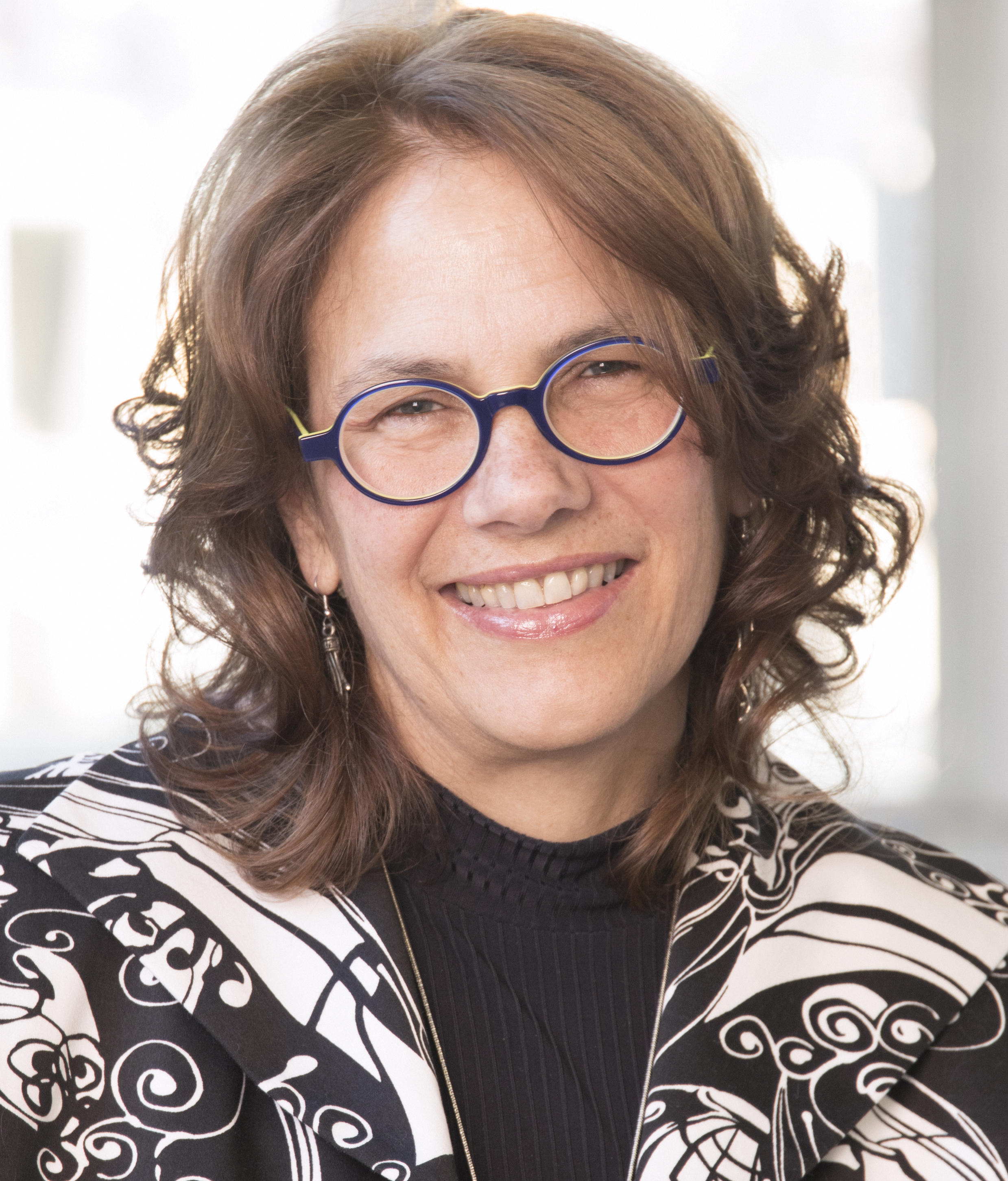
Françoise Baylis |
2025 to present |
|
Alain-G. Gagnon |
2022–25 |
|
Jeremy N. McNeil |
2019–22 |
|
Chad Gaffield |
2017–19 |
|
2015–17 |
|
|
Graham Bell |
2013–15 |
|
2011–13 |
|
|
Roderick Macdonald |
2009–11 |
|
Yvan Guindon |
2007–09 |
|
2005–07 |
|
|
Gilles Paquet |
2003–05 |
|
Howard Alper |
2001–03 |
|
William Leiss |
1999–01 |
|
Jean-Pierre Wallot |
1997–99 |
|
Robert Hall Haynes |
1995–97 |
|
1992–95 |
|
|
1990–92 |
|
|
Digby J. McLaren |
1987–90 |
|
Alexander G. McKay |
1984–87 |
|
1981–84 |
|
|
Robert E. Bell |
1978–81 |
|
Robert E. Folinsbee |
1977–78 |
|
1976–77 |
|
|
Samuel D. Clark |
1975–76 |
|
Claude Fortier |
1974–75 |
|
1973–74 |
|
|
1972–73 |
|
|
Henry E. Duckworth |
1971–72 |
|
1970–71 |
|
|
Claude E. Dolman |
1969–70 |
|
Léon Lortie |
1968–69 |
|
James M. Harrison |
1967–68 |
|
1966–67 |
|
|
1965–66 |
|
|
1964–65 |
|
|
Maurice Lebel |
1963–64 |
|
1962–63 |
|
|
1961–62 |
|
|
Merton Y. Williams |
1960–61 |
|
1959–60 |
|
|
Pierre Daviault |
1958–59 |
|
Thomas W. M. Cameron |
1957–58 |
|
1956–57 |
|
|
George S. Hume |
1955–56 |
|
1954–55 |
|
|
Jean Bruchési |
1953–54 |
|
Guilford B. Reed |
1952–53 |
|
1951–52 |
|
|
John J. O'Neill |
1950–51 |
|
1949–50 |
|
|
1948–49 |
|
|
1947–48 |
|
|
1946–47 |
|
|
Elwood S. Moore |
1945–46 |
|
John K. Robertson |
1944–45 |
|
Olivier Maurault |
1943–44 |
|
1942–43 |
|
|
Frederick W. Howay |
1941–42 |
|
Robert C. Wallace |
1940–41 |
|
1939–40 |
|
|
Victor Morin |
1938–39 |
|
1937–38 |
|
|
1936–37 |
|
|
Reginald W. Brock / George A. Young |
1935–36 |
|
1934–35 |
|
|
1933–34 |
|
|
Francis E. Lloyd |
1932–33 |
|
1931–32 |
|
|
1930–31 |
|
|
Arthur S. Eve |
1929–30 |
|
1928–29 |
|
|
A. H. Reginald Buller |
1927–28 |
|
James H. Coyne |
1926–27 |
|
1925–26 |
|
|
1924–25 |
|
|
Thomas Chapais |
1923–24 |
|
J. Playfair McMurrich |
1922–23 |
|
1921–22 |
|
|
Arthur P. Coleman |
1920–21 |
|
Robert F. Ruttan |
1919–20 |
|
Rodolphe Lemieux |
1918–19 |
|
William D. Lighthall |
1917–18 |
|
Archibald B. Macallum |
1916–17 |
|
Alfred Baker |
1915–16 |
|
1914–15 |
|
|
1913–14 |
|
|
1912–13 |
|
|
1911–12 |
|
|
1910–11 |
|
|
George Bryce |
1909–10 |
|
Joseph-Edmond Roy |
1908–09 |
|
Samuel E. Dawson |
1907–08 |
|
1906–07 |
|
|
Alexander Johnson |
1905–06 |
|
Benjamin Sulte |
1904–05 |
|
1903–04 |
|
|
James A. Grant |
1902–03 |
|
1901–02 |
|
|
1900–01 |
|
|
William Clark |
1899–1900 |
|
1898–99 |
|
|
1897–98 |
|
|
Cornelius O'Brien |
1896–97 |
|
1895–96 |
|
|
1894–95 |
|
|
1893–94 |
|
|
1892–93 |
|
|
1891–92 |
|
|
1890–91 |
|
|
1889–90 |
|
|
1888–89 |
|
|
1887–88 |
|
|
Thomas-Étienne Hamel |
1886–87 |
|
1885–86 |
|
|
1884–85 |
|
|
1883–84 |
|
|
1882–83 |
Only four women have held the position of President of the RSC the first being Patricia Demers (2005-07), the second Yolande Grisé (2011-13), the third Maryse Lassonde (2015-17) and the fourth Françoise Baylis (2025 to present).